
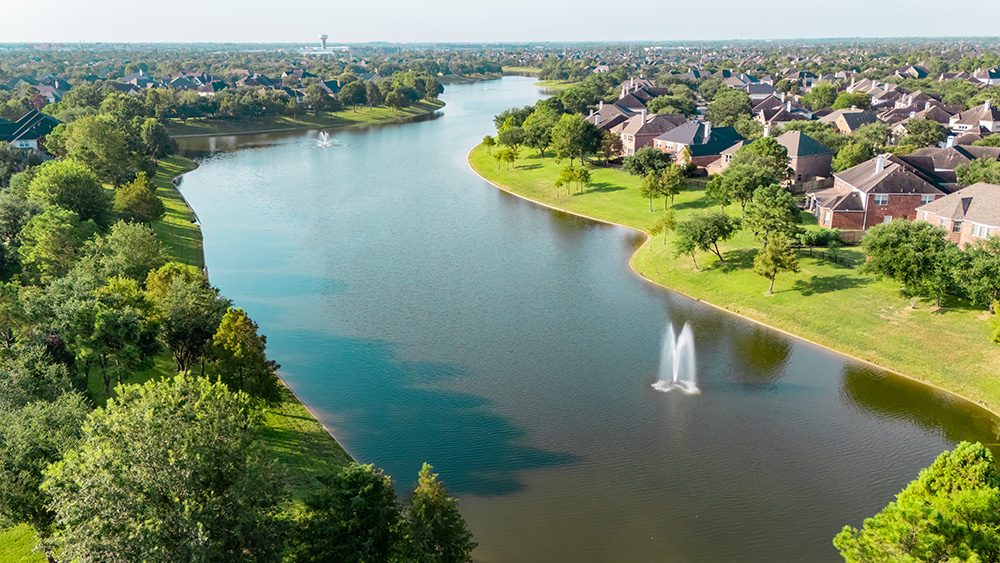
Uncontrolled aquatic vegetation can quickly turn a community pond or stormwater facility from an asset into a maintenance challenge. Effective aquatic weed control Texas property owners can rely on requires more than treating visible growth—it requires understanding why weeds and algae are thriving in the first place and selecting the right management strategy for long-term results.
HOA boards, community managers, and facility managers across Houston, Dallas–Fort Worth, and Central Texas face recurring issues with algae blooms, cattail expansion, duckweed coverage, hydrilla infestations, and shoreline vegetation. This article explains the most effective control methods, what happens when vegetation is left unmanaged, and how a structured maintenance program protects both water quality and property value.
Successful aquatic weed control Texas property managers can depend on combines routine monitoring, accurate plant identification, targeted aquatic herbicide treatments, and proactive pond management. While biological, mechanical, and habitat-based controls have specific uses, professionally applied chemical treatments remain the most dependable and cost-effective solution for managing nuisance weeds and algae in Texas ponds and lakes.
The Problem: Aquatic Weeds and Algae Reduce Pond Performance and Appearance
Aquatic weeds and algae are a natural part of every pond ecosystem, but excessive growth creates operational, aesthetic, and environmental problems. Algae blooms, dense weed beds, and invasive vegetation can interfere with fishing, boating, irrigation, stormwater storage, and overall pond function.
Several factors drive excessive growth:
-
Warm water temperatures
-
High nutrient levels from fertilizer runoff
-
Shallow water conditions
-
Increased sunlight penetration
-
Watershed runoff carrying phosphorus and nitrogen
-
Introduction of invasive species from wildlife, equipment, or nearby waterways
Texas conditions often accelerate these issues. In Houston and Harris County, the warm Gulf Coast climate extends the growing season nearly year-round, allowing algae and aquatic weeds to rebound quickly after untreated outbreaks. In Dallas–Fort Worth, spring algae blooms are a recurring concern, with seasonal search demand for algae control peaking between March and July. In the San Marcos and Austin metro region, seasonal Hill Country runoff can deliver nutrient loads that stimulate rapid vegetation growth while affecting downstream water quality.
Common signs that a pond requires professional aquatic vegetation control include:
-
Floating mats of filamentous algae
-
Excessive duckweed coverage
-
Expanding cattail stands
-
Hydrilla growth restricting open water
-
Foul odors from decomposing vegetation
-
Declining water clarity
-
Fish stress or fish kills associated with low dissolved oxygen
When these symptoms appear, the underlying nutrient and vegetation management issues typically require intervention beyond simple spot treatment.
The LMS Solution: Integrated Aquatic Vegetation Management Produces Better Results
Aquatic vegetation control begins with identifying the specific plant or algae species causing the problem. Different weeds respond to different treatment strategies, and misidentification often leads to ineffective treatment and unnecessary expense.
Lake Management Services uses an integrated management approach that combines monitoring, treatment planning, and ongoing maintenance.
A typical aquatic vegetation control program includes:
-
Site Assessment – Evaluation of pond conditions, vegetation types, water quality, depth, and nutrient sources.
-
Water Quality Analysis – Review of factors such as pH, alkalinity, hardness, turbidity, and dissolved oxygen that influence treatment effectiveness.
-
Targeted Treatment Selection – Application of EPA-approved aquatic herbicides or algaecides designed for specific nuisance species.
-
Monitoring and Follow-Up – Ongoing inspections to evaluate treatment performance and identify new growth before it becomes severe.
-
Long-Term Management Adjustments – Recommendations that address nutrient loading, shoreline conditions, and recurring vegetation pressures.
While biological controls such as sterile grass carp or tilapia can support management efforts in some situations, they have limitations. Fish species consume certain plants more readily than others, and introducing biological controls can alter pond ecology in unintended ways.
Mechanical harvesting and manual removal also have limited applications. Many invasive aquatic plants reproduce through fragmentation, meaning small pieces left behind can generate new infestations. As a result, these methods often require repeated effort and higher long-term costs.
For most HOA and commercial pond applications, aquatic herbicide services combined with routine monitoring provide the most reliable balance of effectiveness and cost control.
Learn more about LMS Services:
Consequences of Inaction: Small Vegetation Problems Become Larger Operational Issues
Unmanaged aquatic vegetation rarely stabilizes on its own. Instead, excessive growth contributes to progressively larger maintenance and water quality challenges.
Common consequences include:
-
Reduced stormwater storage capacity
-
Blocked water flow through ponds and channels
-
Increased mosquito breeding habitat
-
Poor aesthetics that affect community perception and property values
-
Recreational limitations for residents and visitors
-
Fish kills caused by oxygen depletion
-
Odors associated with decomposing vegetation
One of the most significant risks occurs when large volumes of vegetation die and decompose simultaneously. As decomposition accelerates, dissolved oxygen levels decline, potentially causing fish mortality and further water quality degradation.
Over time, nutrient accumulation and vegetation growth also contribute to eutrophication—the natural aging process that causes ponds to become progressively shallower and more susceptible to algae and weed infestations.
Addressing vegetation issues early generally reduces treatment costs and helps preserve long-term pond functionality.
Regulatory and Compliance Context: Pond Maintenance Supports Stormwater Compliance Goals
Stormwater ponds frequently function as Best Management Practices (BMPs) designed to improve water quality and manage runoff volume. Excessive aquatic vegetation can reduce the effectiveness of these systems and complicate inspection requirements.
Across Texas, regulatory oversight may involve:
-
Texas Commission on Environmental Quality (TCEQ)
-
Municipal Separate Storm Sewer System (MS4) permit holders
-
Harris County stormwater management requirements
-
City of Austin Watershed Protection Department programs
-
Edwards Aquifer Authority water quality initiatives
While aquatic vegetation itself is not automatically a compliance violation, poorly maintained stormwater ponds can experience reduced treatment performance, sediment accumulation, and drainage issues that attract regulatory attention.
For community associations and commercial property owners, regular pond inspections and vegetation management support broader stormwater asset management objectives while helping maintain BMP functionality.
Market-Specific Context: Texas Conditions Require Regionalized Management Strategies
Texas ponds experience different vegetation pressures depending on location.
Houston and Harris County ponds face nearly continuous growing conditions due to warm temperatures and extended rainfall patterns. Irrigation ponds and detention facilities often require year-round monitoring to prevent algae and aquatic weeds from becoming established.
Dallas–Fort Worth properties typically experience intense spring and early summer algae growth. Proactive treatment before peak bloom periods helps reduce recurring outbreaks throughout the warmer months.
San Marcos, Austin Metro, and Central Texas ponds frequently receive nutrient-rich runoff from seasonal storm events. Protecting water quality is particularly important in areas connected to sensitive groundwater resources and the Edwards Aquifer system.
Although management strategies vary by region, consistent monitoring remains the foundation of effective aquatic vegetation control.
Contact LMS to request a free pond assessment and learn about our scheduled maintenance programs.
Frequently Asked Questions
How often should aquatic weed control treatments be performed in Texas?
Most ponds require regular inspections and multiple treatment visits throughout the growing season. The exact frequency depends on vegetation type, nutrient loading, weather conditions, and pond use.
Are aquatic herbicide treatments safe for fish and wildlife?
EPA-approved aquatic herbicides and algaecides are designed for use in aquatic environments when applied according to label requirements. Proper application rates and timing help protect fish, wildlife, and surrounding ecosystems.
What causes recurring algae blooms in ponds?
Recurring blooms are typically driven by excess nutrients, sunlight, warm temperatures, and shallow water conditions. Treating visible algae helps, but long-term management also requires addressing the conditions that promote growth.
Can grass carp eliminate all aquatic weeds?
No. Sterile grass carp have feeding preferences and do not consume all nuisance species equally. They are often one component of a broader aquatic vegetation control strategy rather than a complete solution.
Why is professional plant identification important?
Different aquatic weeds require different treatment approaches. Accurate identification prevents ineffective treatments, reduces unnecessary costs, and improves long-term control o