


Your pond likely needs dredging if you see sediment shelves, more algae and weeds, faster flooding after rain, sulfur odors, or a failed stormwater inspection. Each sign points to the same cause: sediment has filled the pond and cut its capacity. Pond dredging in Houston TX removes that buildup and restores the original design depth.
These signs matter most for boards in Katy, Sugar Land, and The Woodlands managing detention ponds 10 or more years old. Below, we explain why Houston ponds fill so quickly and what each sign looks like on a property walk. We also cover what to expect from the process.
Why Houston Ponds Fill With Sediment Faster Than Most
Greater Houston sets up detention ponds for fast sedimentation. First, the region’s clay-heavy soils erode easily and stay suspended in runoff. Then, intense storms and hurricane season deliver huge volumes of water in short bursts. That water carries soil straight into the nearest pond.
Development adds to the load. Master-planned growth across Katy, Fulshear, Sugar Land, and The Woodlands means more roofs, streets, and parking lots. Because these hard surfaces shed water quickly, runoff hits ponds faster and carries more silt, grass clippings, and debris.
Upstream construction makes it worse. For example, new sections built in the Cypress Creek and Spring Creek watersheds can send exposed soil downstream for years. As a result, many HOA ponds built in the 1990s and 2000s now hold far less water than planned.
Your pond is also one piece of a larger system. Detention ponds release water into channels and bayous that the Harris County Flood Control District https://www.hcfcd.org/ maintains across the county. When a pond loses capacity, more water reaches that regional system faster during storms.
Sign 1. Sediment Shelves and a Shrinking Pond
Walk the shoreline and look for sandbars, mudflats, or flat shelves of exposed soil along the edges. You may also notice that the pond looks smaller than it did a few years ago. In addition, check inlet pipes, since sediment often piles up first where runoff enters. A pipe that once sat above the water but now disappears into mud is a clear warning. Photos from the same spot each year make this change easy to track.
Sign 2. More Algae and Aquatic Weeds
Shallow water warms faster in the Houston sun, and warm water fuels algae blooms. If treatments that used to work no longer hold, sediment may be the reason. Similarly, cattails and other rooted plants spreading toward the center of the pond signal that the bottom is rising. Rooted plants need shallow water to take hold. So when they advance, the sediment is usually advancing with them.
Sign 3. Lost Stormwater Detention Capacity
A pond full of sediment has less room for rain. Watch how the pond behaves during a heavy storm. Does it fill faster than it used to? Does it drain more slowly afterward or spill into streets and yards? If so, the pond has likely lost capacity. Resident flooding complaints often follow, and those complaints tend to reach the board before anyone checks the pond.
Sign 4. Sulfur Odors Residents Complain About
A rotten-egg smell near the pond usually comes from decomposing organic sediment. As that muck breaks down, it uses up the oxygen in the water and releases sulfur gases. Consequently, odor complaints often rise in late summer, when water is warmest and oxygen is lowest. Low oxygen can also stress fish. If residents report dead fish along with the smell, treat it as an urgent sign.
Sign 5. Failed Inspections That Point to Pond Dredging in Houston TX
Harris County and municipal inspectors check whether stormwater facilities still work as designed. If an inspector flags reduced depth or blocked outlets, your pond may need dredging to pass the next visit. Ignoring the finding can lead to repeat violations, so treat it as a firm deadline.
What Happens During Pond Dredging in Houston TX?
Dredging follows a clear sequence, and most boards find the process easier to plan once they see the steps.
Assessment and survey
First, a technician measures the current depth across the pond, often with a bathymetric survey. That survey is a depth map of the pond bottom. Comparing it to the original design plans shows how much capacity the pond has lost and how much sediment needs to come out.
Removal method
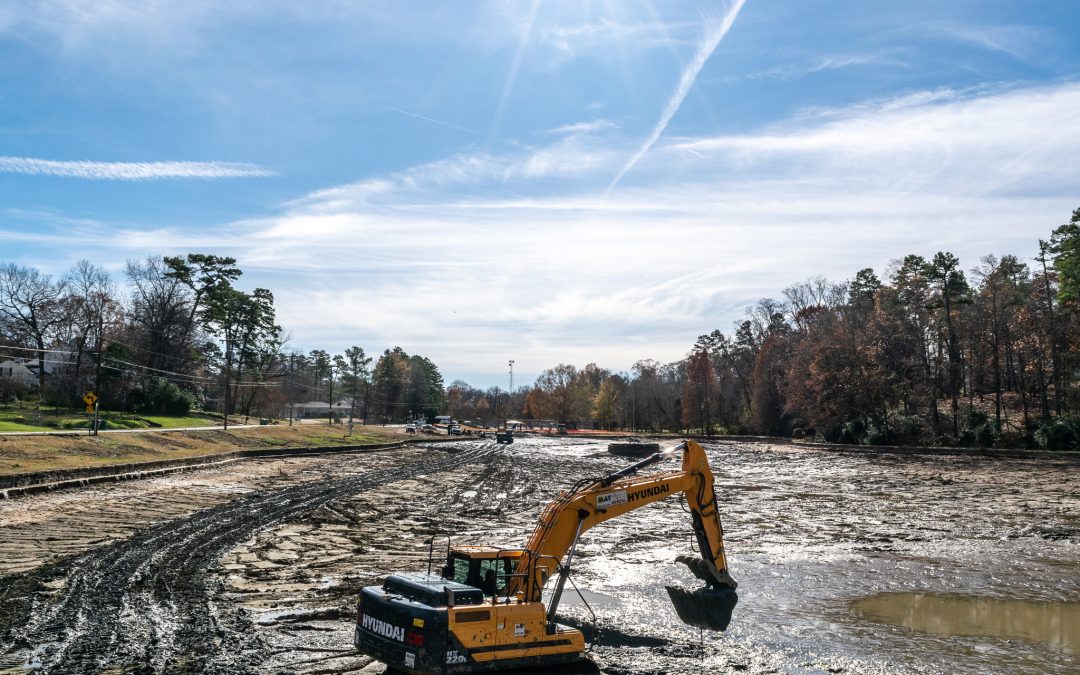
Next, the crew chooses a method. Mechanical dredging uses excavators, often after the crew partly drains the pond. Hydraulic dredging, in contrast, pumps water and sediment through a pipe into dewatering bags. With this method, the pond can stay full.
Hauling, restoration, and follow-up
After removal, the crew dries and hauls the sediment off site. Then they repair disturbed slopes and shorelines. Finally, a follow-up survey confirms the pond has returned to design depth. That survey also gives your board a record for future inspections.
What your board should plan for
Expect truck traffic, equipment noise, and limited access to part of the shoreline while work is underway. Notify residents early and explain why the work matters for flood protection. In addition, ask your vendor how they will protect fish, shoreline plants, and nearby landscaping.
Budget matters too. Rather than treating dredging as an emergency expense, add depth surveys and future sediment removal to your reserve study. That way, the board can plan the work before a failed inspection forces it.
Frequently Asked Questions About Pond Dredging in Houston TX
How do I know if my HOA pond needs dredging?
Look for five signs: sediment shelves, more algae and weeds, faster storm flooding, sulfur odors, and failed inspections. If you see two or more, schedule a depth survey. The survey shows how much capacity your pond has lost.
How often should a Houston retention pond be dredged?
No single schedule fits every pond. Frequency depends on watershed size, upstream construction, soil type, and storm history. Instead of guessing, have the pond surveyed every few years and dredge when lost capacity starts to affect drainage.
What causes pond sedimentation in Greater Houston?
Clay-heavy soils, intense rainfall, and dense development all drive sedimentation in Greater Houston. Runoff from roofs, streets, and construction sites carries soil into detention ponds, where it settles. Over time, that buildup reduces depth and capacity.
Seeing one or more of these signs? Lake Management Services offers free assessments to help HOA boards decide if pond dredging in Houston TX is the right next step. Explore our Houston stormwater corrective repair services https://lmslp.com/houston-pond-stormwater-management/ to schedule your assessment.


